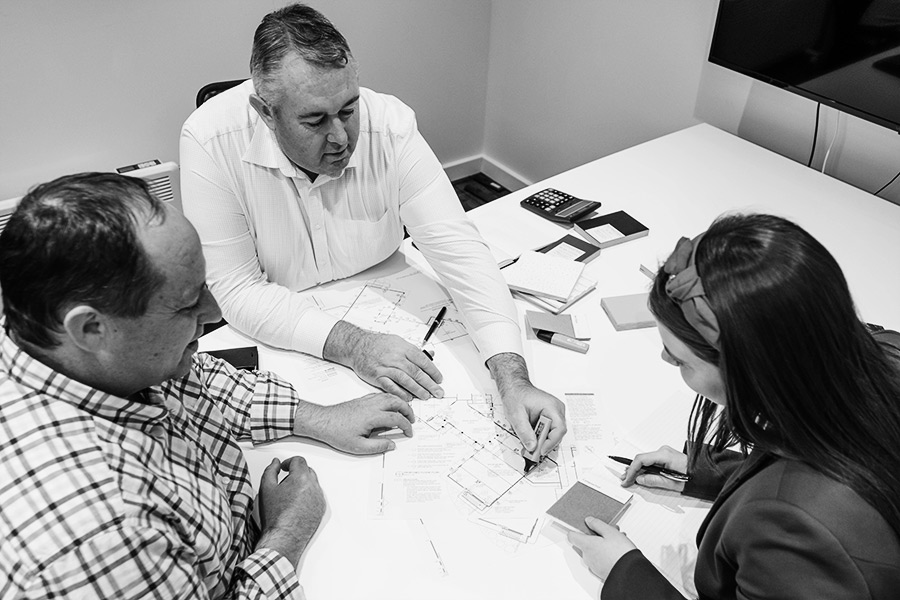
A Space Designed for People
Not every business problem starts with strategy, staffing or systems.
Sometimes the issue is the space itself.
A workplace can look functional at a glance and still be holding a business back every day. Desks may be in place, meeting rooms may exist, and the business may have learned how to operate around the environment. But that does not mean the space is still working well. In many cases, the real cost of an outdated or poorly aligned workspace is not obvious until it begins affecting productivity, communication, staff experience and customer perception.
These costs are often hidden because they build slowly.
A team adapts to a noisy office. Staff learn to work around awkward layouts. Meetings happen in spaces that are not fit for purpose. Storage is added wherever it can fit. Customers are welcomed into an environment that no longer reflects the quality of the business. None of these issues may seem urgent on their own, but together they create friction that affects the way the organisation performs.
Inefficiency Becomes Part of the Day
One of the biggest hidden costs of an underperforming space is wasted time.
When people have to move around a poorly planned layout, search for available rooms, take calls in unsuitable areas or work around bottlenecks, small inefficiencies start to shape the workday. Individually these moments may feel minor, but repeated over weeks and months, they have a real impact on productivity.
A workplace should support efficient movement and clear workflow. When it does not, staff end up adjusting their behaviour to compensate for the space. That adjustment takes energy and attention away from more important work.
Poor Layout Affects Communication
Communication is often treated as a cultural issue, but the workplace plays a major role in how easily people connect.
If teams are physically separated in ways that do not match how they work, collaboration becomes harder. If every conversation risks disturbing someone else, people may avoid discussing things altogether. If meeting rooms are limited, poorly located or not suited to the kinds of discussions taking place, communication becomes less effective.
A well planned commercial space supports both focused work and natural interaction. When that balance is missing, communication can become more fragmented and less productive than it should be.
Noise Has a Real Cost
Acoustics are one of the most commonly underestimated issues in commercial environments.
Noise affects concentration, privacy and comfort. In open plan offices, healthcare environments and customer facing spaces, poor acoustic performance can make a workplace feel more stressful and less professional. Staff may find it harder to focus. Sensitive conversations may become difficult. Visitors may notice the lack of privacy or calm.
The problem is that teams often adapt to noise and stop treating it as a design issue. Headphones, workarounds and room swapping become normal. But normal does not mean effective. Over time, poor acoustics can reduce the quality of both work and workplace experience.
The Customer Experience Can Suffer Too
The way a business space feels has a direct effect on how customers perceive the business itself.
If a commercial environment feels dated, disorganised or poorly planned, it can weaken confidence before a word is spoken. This is especially important in customer facing sectors such as hospitality, medical, retail and professional services, where trust and first impressions play a major role in decision making.
A space that no longer fits the way a business operates often sends mixed signals. The service may be excellent, but the environment may not reflect that. Over time, this disconnect can affect how the brand is experienced and remembered.
Staff Experience Matters More Than Ever
A workplace has a strong influence on how people feel throughout the day.
When the environment supports focus, comfort and ease of movement, staff are more likely to work well and feel positive about being there. When it creates frustration, distraction or constant interruption, that experience changes. Even if the issues are not dramatic, they affect morale over time.
Businesses are increasingly aware of the link between environment and staff wellbeing. A space that no longer supports the way people work can contribute to disengagement, fatigue and lower satisfaction. These impacts are difficult to measure precisely, but they are very real.
Growth Can Make Old Problems Worse
Many businesses outgrow their space gradually.
A layout that worked when the team was smaller can become inefficient as the business expands. Meeting rooms may no longer be enough. Storage may become inadequate. Workstations may feel crowded. Shared spaces may stop functioning the way they were intended to.
When this happens, the business often continues operating in the same environment for longer than it should, simply because change feels easier to delay. But the longer an outdated space remains in place, the more the organisation ends up paying for it through inefficiency, frustration and underperformance.
The Real Cost Is Often Greater Than Expected
Businesses tend to think about workspace investment in terms of upfront cost. What will the fitout cost? What will the upgrade require? How much disruption will the project create?
Those are important questions, but they are only one side of the equation.
The other side is the ongoing cost of doing nothing. Wasted time, reduced focus, poor flow, inconsistent customer experience and staff frustration all carry a business cost, even if they do not appear as a line item in the budget. In many cases, those hidden costs add up more quickly than businesses realise.
Better Spaces Support Better Performance
The goal of a commercial fitout is not simply to improve appearance. It is to create an environment that supports the way the business actually works.
That means understanding workflow, team needs, privacy requirements, customer experience and future growth before making design decisions. When a space is aligned with those needs, it becomes easier to use, easier to manage and more effective as a business tool.
The strongest commercial interiors do not just look better. They remove friction, improve flow and help the organisation operate more smoothly every day.
The Impact of the Right Space
When a workplace no longer fits the way a business works, the cost is rarely immediate or dramatic. It shows up in smaller ways that become normal over time. But normal does not mean optimal.
A business space should support performance, not quietly work against it.
That is why reviewing how a workplace functions is so valuable. It shifts the conversation from appearance to impact and helps businesses understand whether the environment is still supporting the people using it.
Sometimes the biggest opportunity for improvement is not changing the team or the process.
It is changing the space around them.